Question 03 · MSc dissertation
Why do solar panels hate the sun?
Every degree above 25 °C costs a silicon cell up to half a percent of its output, so the sunniest hour is also the least efficient. My dissertation designs a way out: I built a photovoltaic-thermal (PVT) panel that pumps water behind the cells, harvesting the waste heat and keeping the silicon cool enough to do its job. One panel, two harvests: electricity and hot water.
Scroll ↓
The problem, made visible.
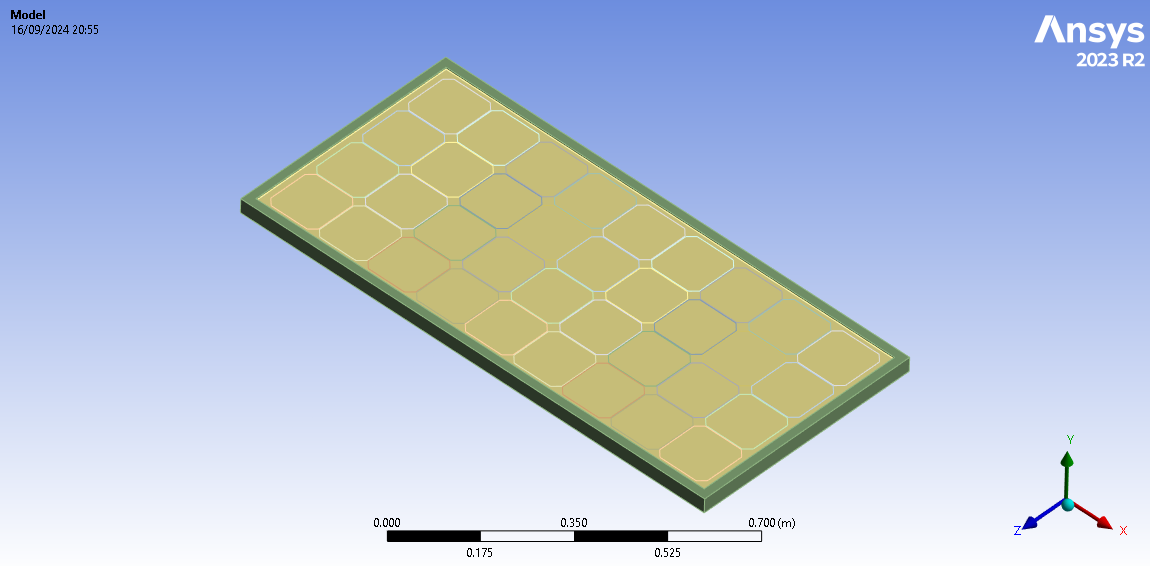
I modelled the panel layer by layer (ETFE front sheet, EVA encapsulant, monocrystalline cells, PET, adhesive, carbon-fibre backing) and simulated it under solar load in ANSYS Fluent. Uncooled, the stack settles above 53 °C: an efficiency loss of 11–14% exactly when irradiance peaks.
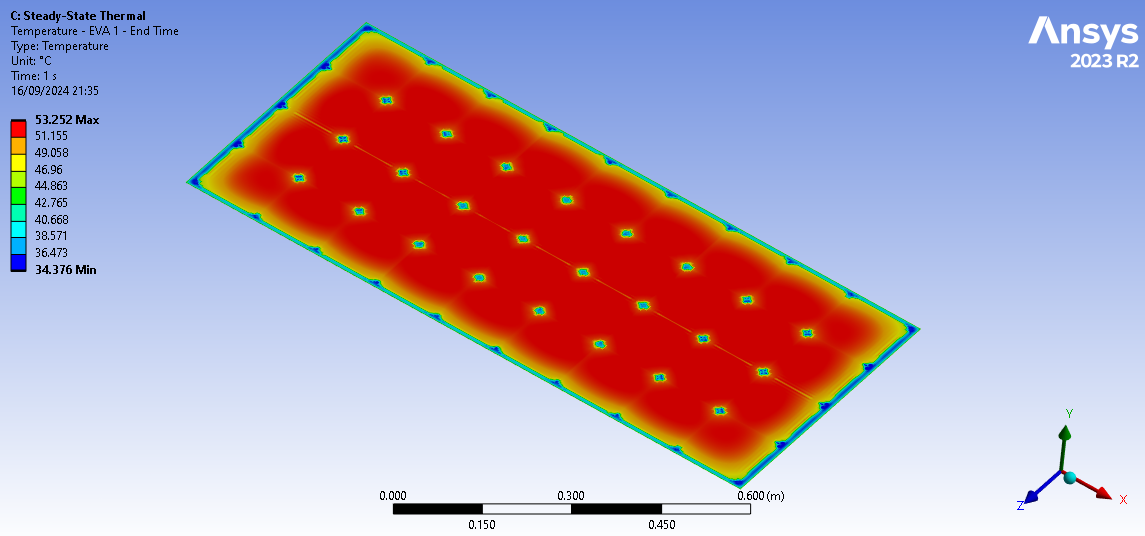
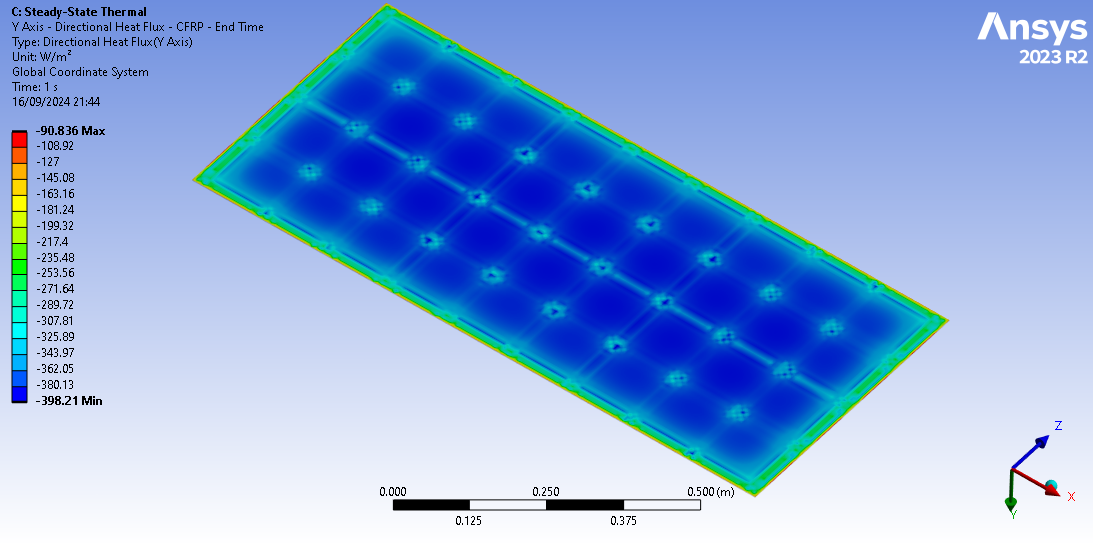
Same geometry, same sun. The only difference is the fluid loop.
Designed part by part.
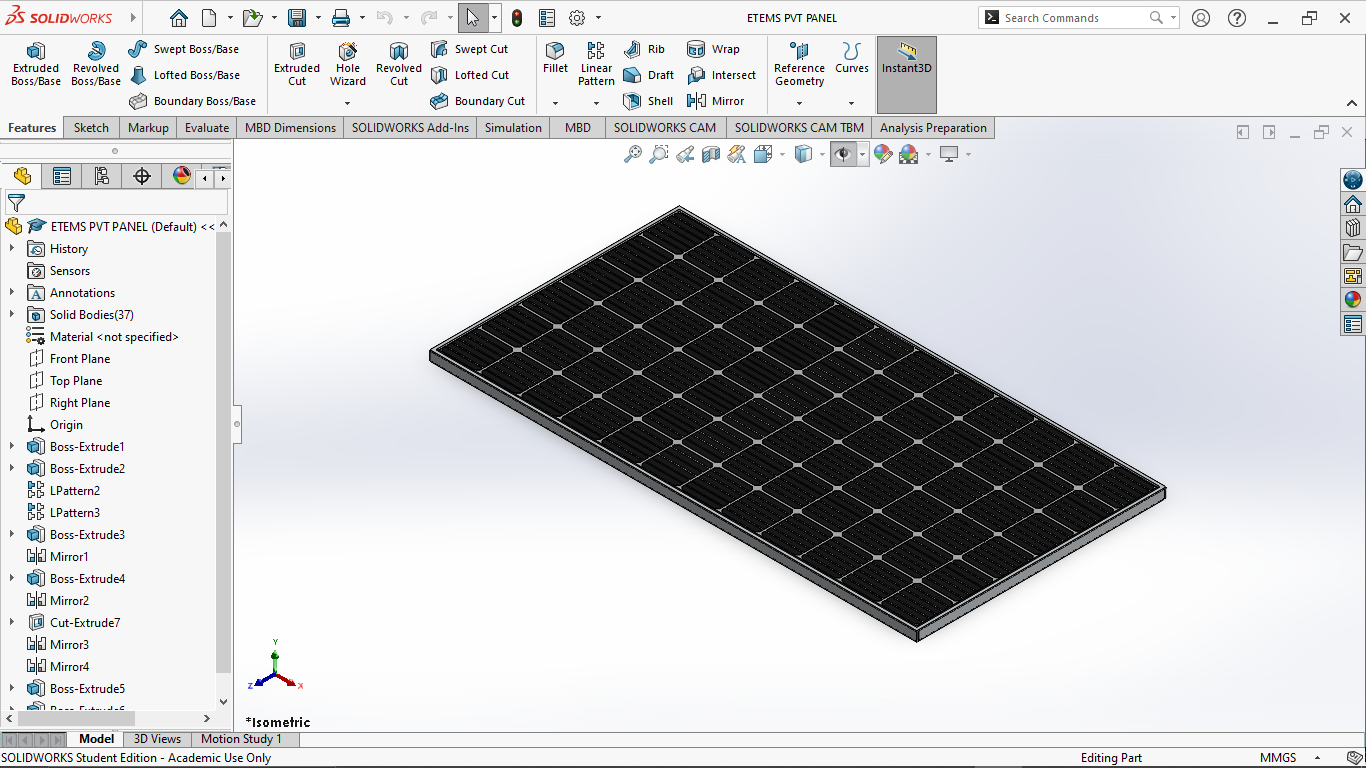
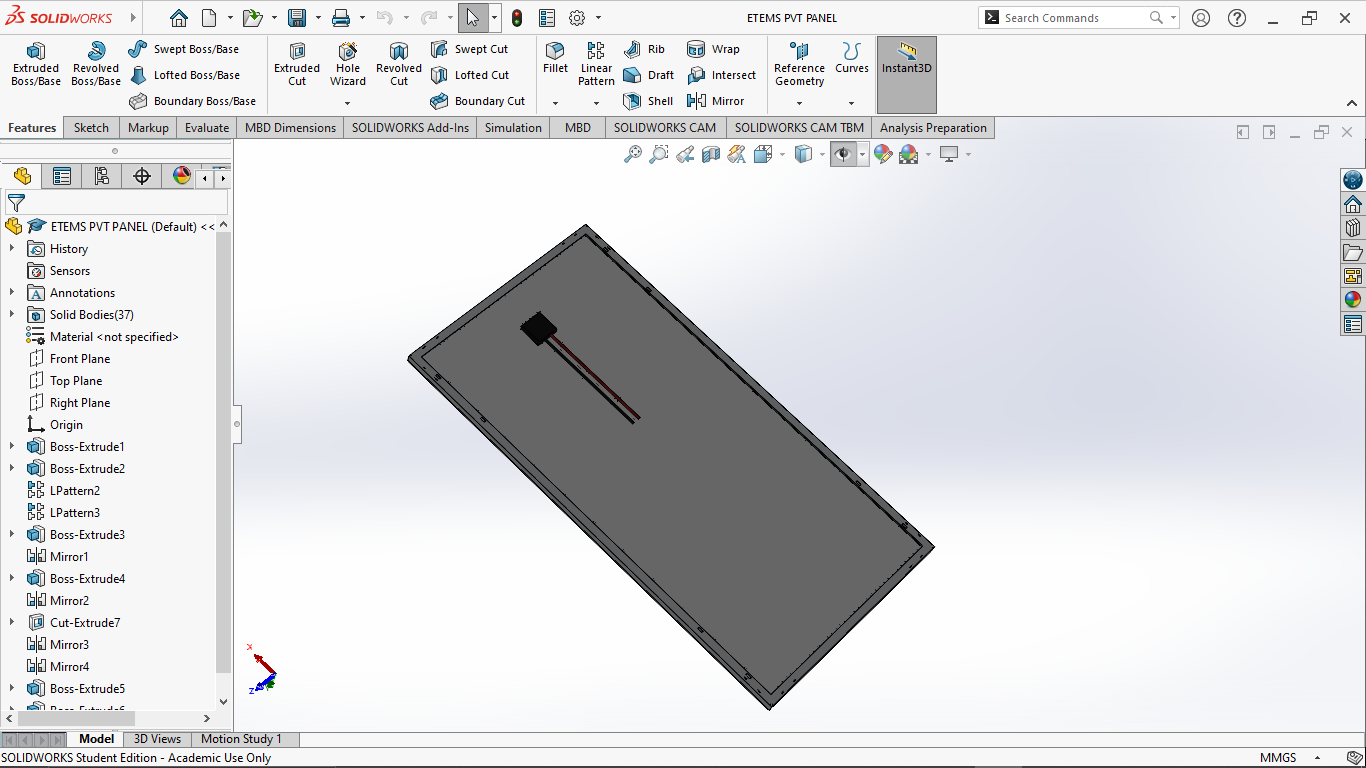
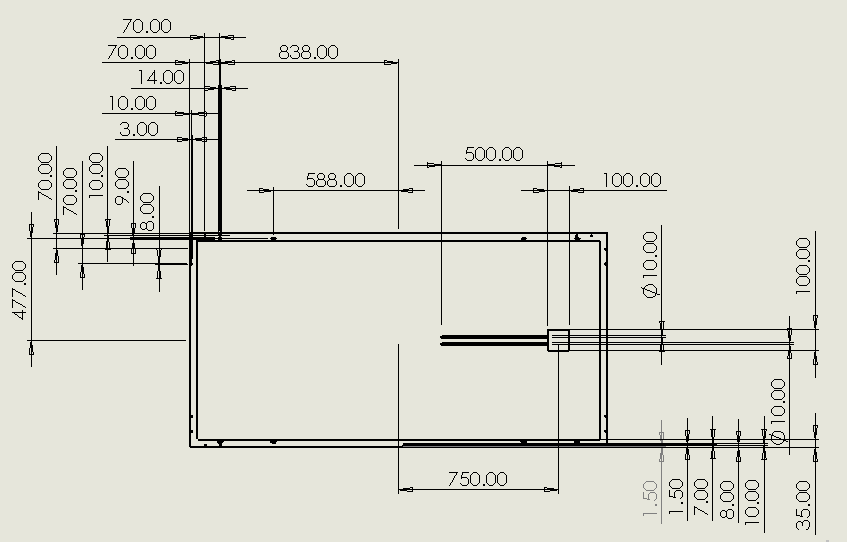
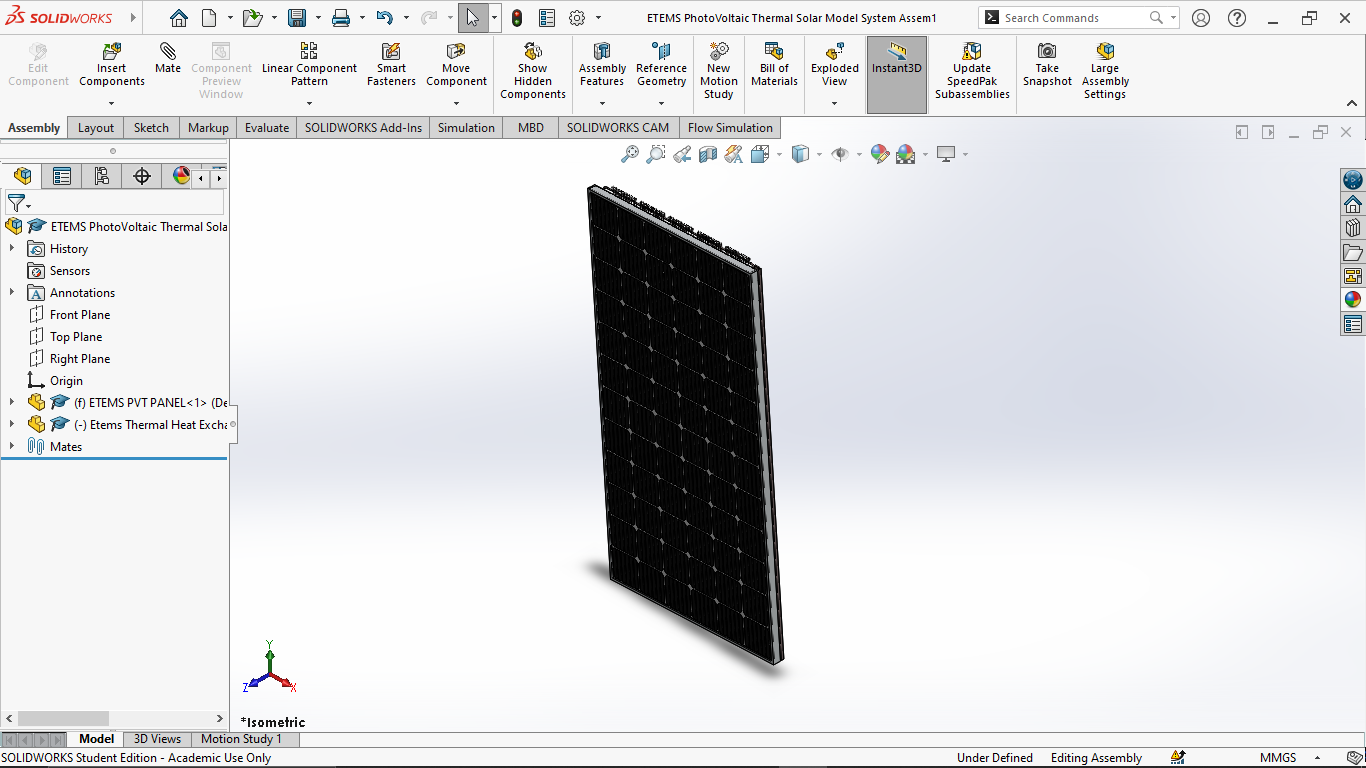
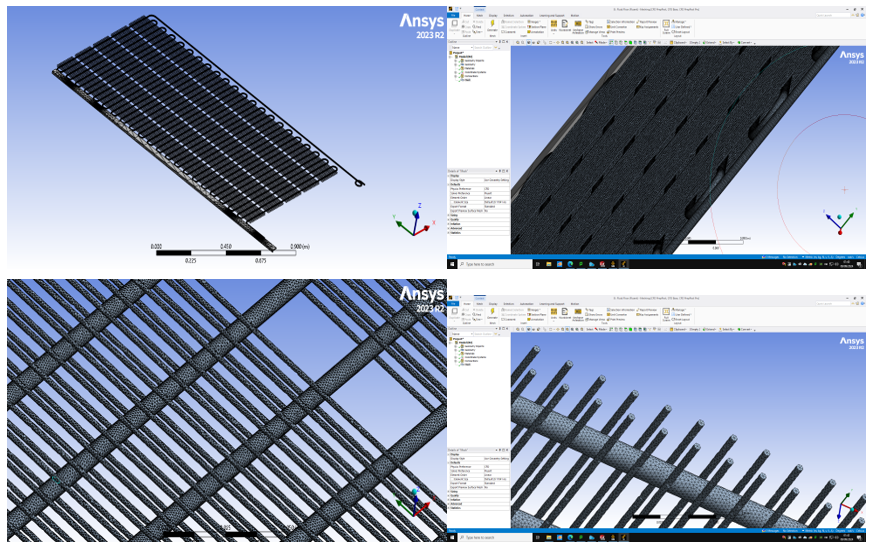
I built the panel and its integrated heat exchanger as native SOLIDWORKS parts and assembled them into a full PVT module, checking geometry, material arrangement, and manufacturability before any simulation ran. The mesh was verified for quality (skewness 0.617) before any results were trusted.
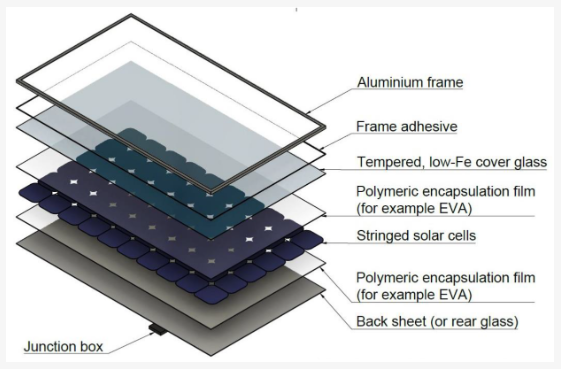
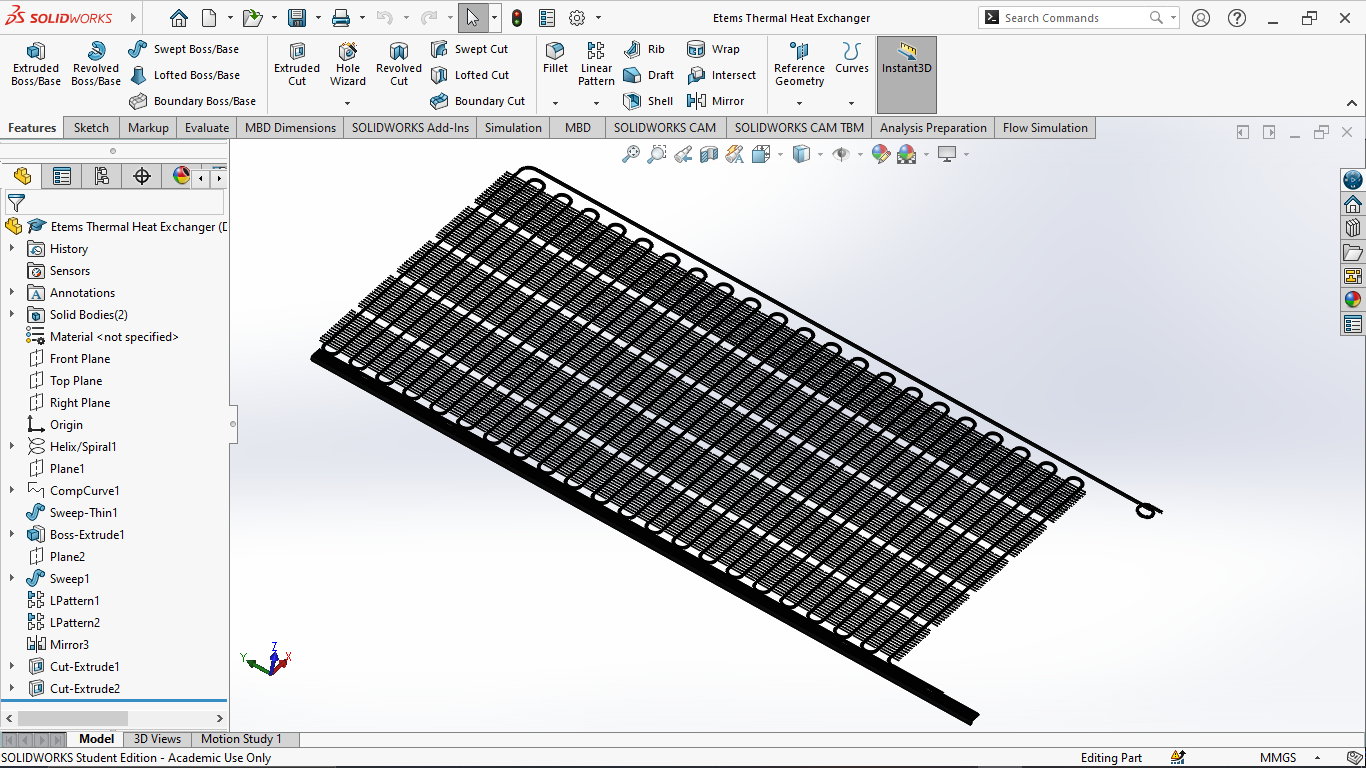
Then tested against a real postcode.
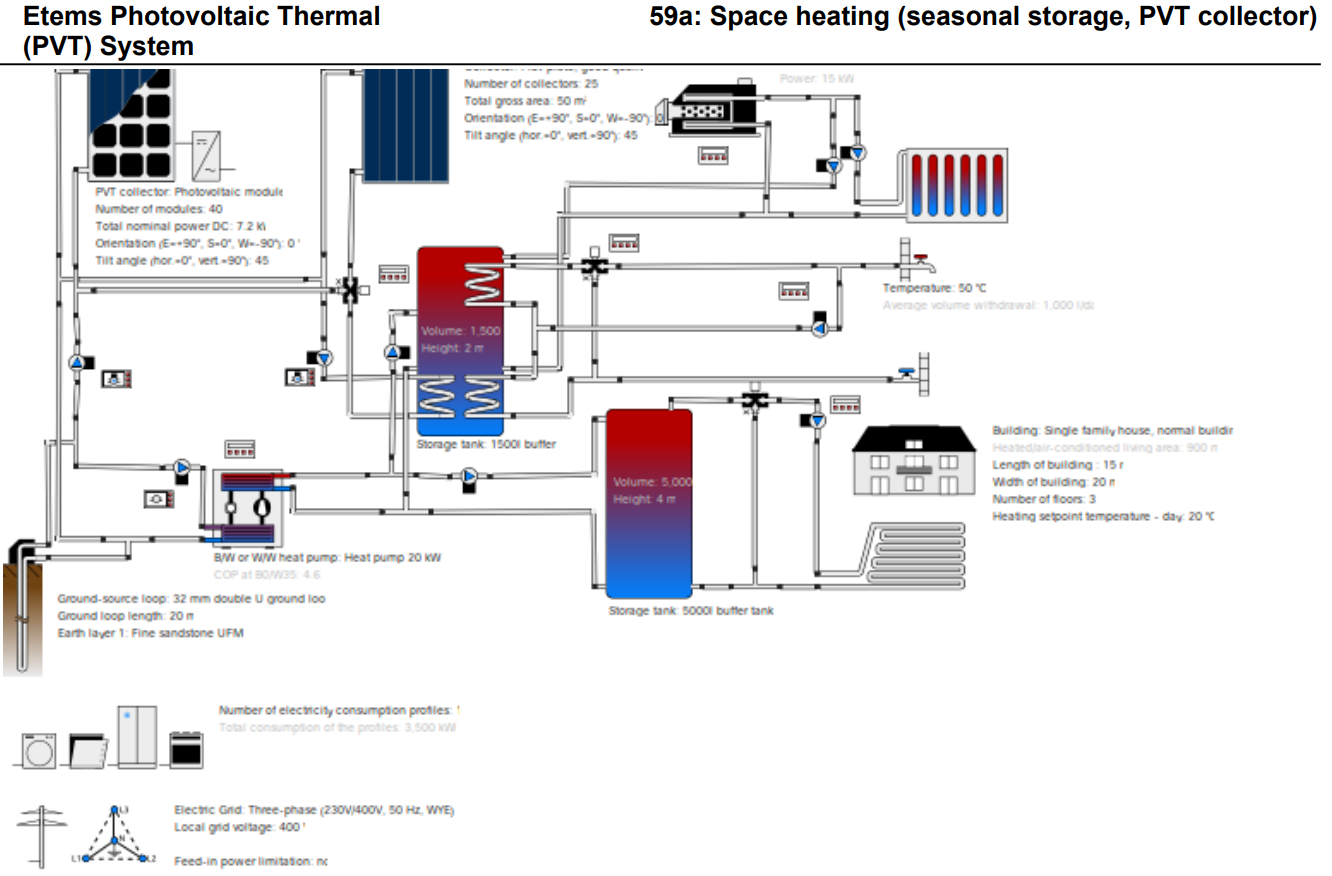
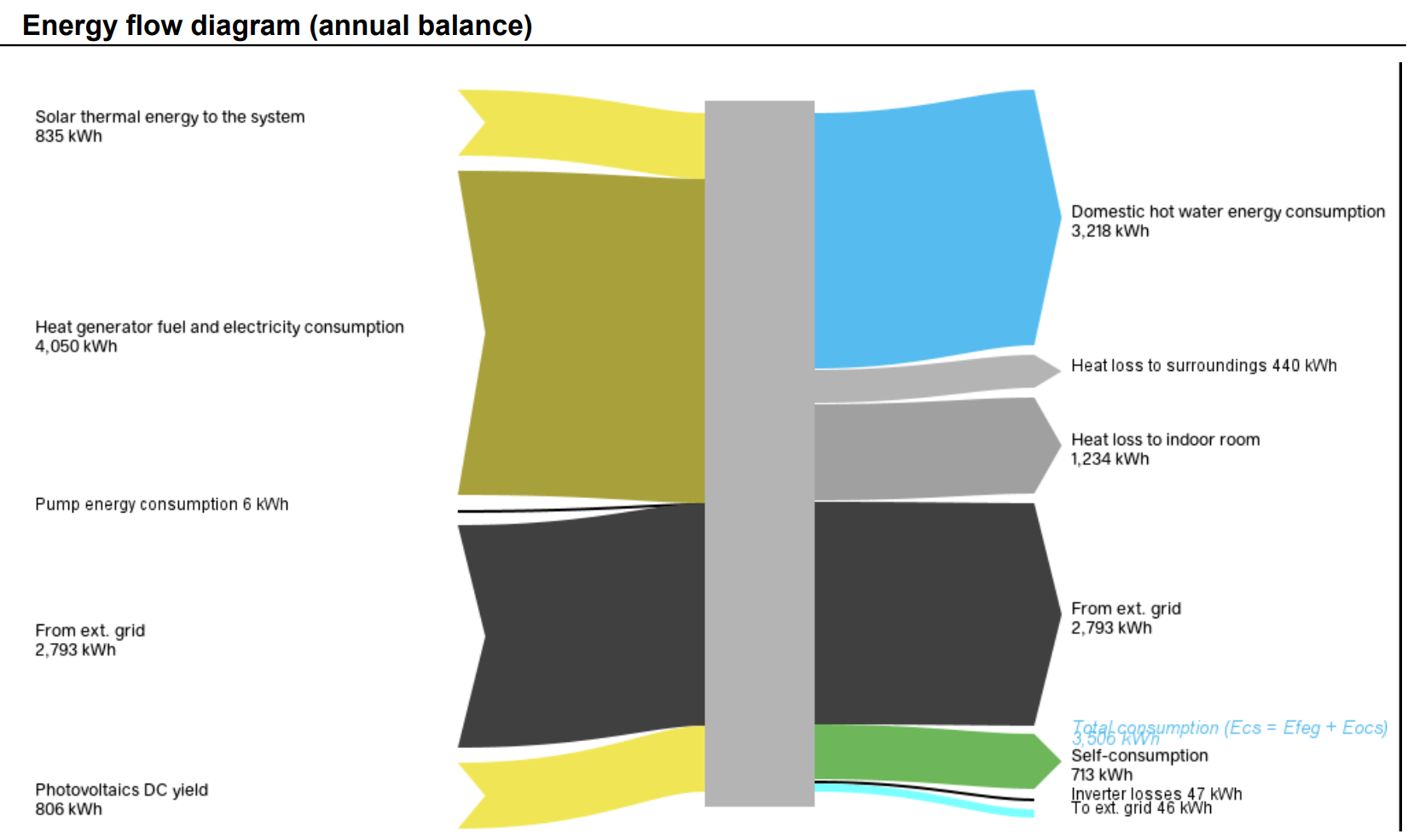
I then dropped the module into a whole-building Polysun model for Wandsworth, London (real irradiance, real hot-water demand) and compared it across three system configurations. The simulated system generates roughly 806 kWh of electricity and 835 kWh of useful thermal energy a year at a performance ratio of 0.79, with the harvested heat preheating domestic hot water and covering 21.4% of the annual heating demand.
Honest about its limits.
Everything here lives in simulation: idealised weather, no manufacturing tolerances, no leaks. The dissertation says so, and maps the next step: a physical prototype, dynamic weather models, and advanced coolants (nanofluids, phase-change materials) to hold efficiency through winter. That prototype is the work I want to do next.
Original files
The full dissertation, the native SOLIDWORKS models, and the Polysun project.
MSc dissertation, full text, 15,672 words.docx · 14 MB PVT system assembly.SLDASM · 15 MB PVT panel part.SLDPRT · 4.6 MB Thermal heat exchanger part.SLDPRT · 15 MB Technical drawing plan.SLDDRW · 8.7 MB Polysun project file.pse · 1.6 MB Polysun report: DHW preheating by PVT.pdf Polysun report: space heating, seasonal storage.pdf Polysun report: DHW and space heating.pdf